What is DNS and why is it vulnerable?
DNS (Domain Name System) is often compared to the phone book of the Internet. When a user types your web address into their browser, DNS translates that domain name into an IP address to direct them to the right server.
But this system, originally designed without any authentication mechanism, has significant weaknesses. Attackers can exploit it to redirect your visitors to fake sites without your knowledge: this is known as DNS cache poisoning (or DNS spoofing).
DNSSEC: the technical answer to these threats
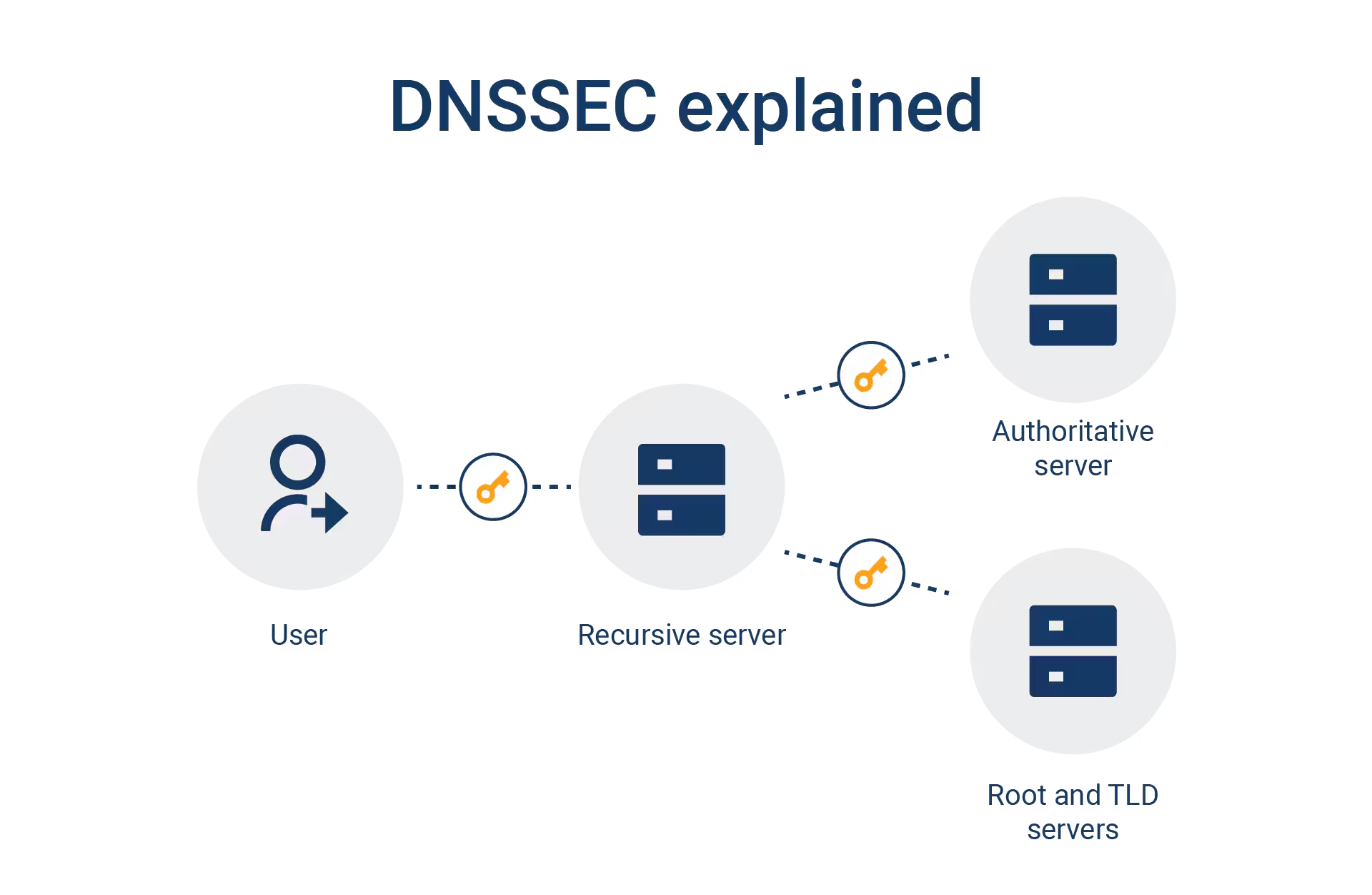
DNSSEC (Domain Name System Security Extensions) is an extension of the DNS protocol that adds a layer of cryptographic verification. In practice, it allows a domain's DNS records to be digitally signed, ensuring that the responses received are authentic and have not been altered along the way.
Without DNSSEC, nothing prevents a malicious actor from intercepting a DNS query and sending back a fake response. With DNSSEC, every response can be verified thanks to a cryptographic chain of trust that goes all the way up to the Internet's root servers.
Threats that DNSSEC helps counter
DNS Spoofing / Cache Poisoning: injecting false information into a DNS resolver's cache to hijack traffic.
Man-in-the-Middle attacks: intercepting and modifying DNS responses between the server and the user.
Targeted phishing: redirecting visitors to a fraudulent site imitating yours, to steal credentials or banking data.
Domain hijacking: manipulating records to take partial control of your traffic.
Is DNSSEC really useful for your site?
Many businesses think cybersecurity only concerns large organizations. In reality, every active domain is a potential target, regardless of the size of the organization.
An e-commerce site, a corporate portal, an institutional website or even a simple professional showcase site can fall victim to DNS hijacking. The consequences are serious: loss of customer trust, data leaks, damage to reputation.
Enabling DNSSEC on your domain is one of the most fundamental and effective security measures you can put in place.
DNSSEC and .DZ domains: a major step forward for Algerian businesses
For a long time, enabling DNSSEC on local extensions such as .DZ was not available or required complex procedures. Today, this technology is supported for .DZ domains hosted at Hostarts.
As an Algerian host committed to digital security, Hostarts lets you benefit from DNSSEC protection on your .DZ domains, strengthening the credibility and security of your local online presence.
This is excellent news for Algerian businesses, government bodies and professionals who want to adopt cybersecurity best practices without giving up their local roots.
How do you enable DNSSEC on your domain at Hostarts?
DNSSEC is generally enabled from your domain management area. At Hostarts, our technical teams are available to support you through this process and make sure the configuration is set up correctly.
A few points to keep in mind for a successful activation:
DNSSEC must be enabled both at the registrar level and at the domain registry level (e.g. ANIC for .DZ).
DS (Delegation Signer) records must be properly propagated.
A misconfiguration can make your domain unreachable: it is better to get help from a professional.
DNSSEC, a pillar of your cybersecurity strategy
Securing your domain name with DNSSEC is not an option reserved for experts. It is a concrete, accessible measure that is strongly recommended for any entity with an online presence.
Combined with other best practices — SSL certificate, two-factor authentication, DNS monitoring — DNSSEC helps build a reliable digital infrastructure that your users can trust.
Want to secure your .DZ domain or learn more about the cybersecurity solutions offered by Hostarts? Contact our team today.